











Master
Media Component
Content
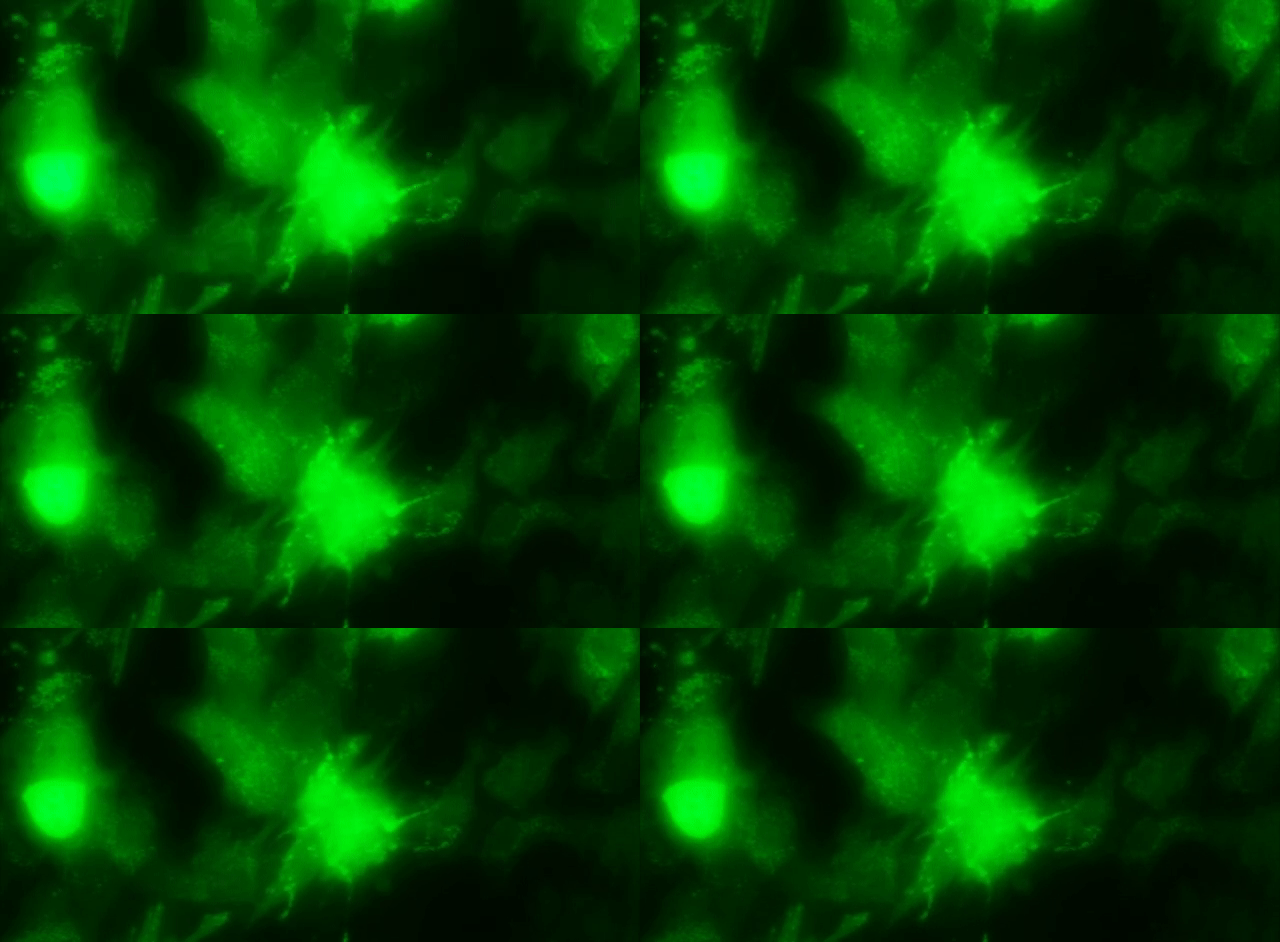
Direct cardiac reprogramming approach uses specific genes to directly convert the fibroblasts into cardiac myocytes. At the HEART Center, we are developing innovative gene therapies based on direct cardiac reprogramming, a cutting-edge approach that transforms existing cells into heart cells. Our preclinical studies have shown promising results, including improved heart function and tissue regeneration following gene delivery. To ensure safety and efficiency, we are exploring multiple delivery methods-such as viral vectors and non-viral techniques-to introduce therapeutic genes into the heart. In addition, our research focuses on identifying:
- The most effective gene combinations
- The optimal timing for delivery
- The molecular mechanisms behind direct reprogramming
Selected Publications
- p63 Silencing induces reprogramming of cardiac fibroblasts into cardiomyocyte-like cells
- Heart regeneration: The endothelial cell comes first
- Cardiac stem cell trials and the new world of cellular reprogramming: Time to move on
- Reciprocity of Action of Increasing Oct4 and Repressing p53 in Transdifferentiation of Mouse Embryonic Fibroblasts into Cardiac Myocytes
- Triplet polycistronic vectors encoding Gata4, mef2c, and Tbx5 enhances post-infarct improvement compared with singlet vectors
- In vivo cardiac cellular reprogramming efficacy is enhanced by angiogenic preconditioning of the infarcted myocardium with VEGF
- Histone Demethylase LSD1 is Involved in SALL4 Mediated Transcriptional Repression in Hematopoietic Stem Cells
- Administration of a novel reprogramming formula improves cardiac function and decreases cardiac fibrosis in a myocardial infarction model
- Chemical Enhancement of In Vitro and In Vivo Direct Cardiac Reprogramming
- Improved Cardiac Function in Postischemic Rats Using an Optimized Cardiac Reprogramming Cocktail Delivered in a Single Novel Adeno-Associated Virus
- Sall4 and Gata4 induce cardiac fibroblast transition towards a partially multipotent state with cardiogenic potential